Rehabilitation Personal Training in the City of London (EC3V)
Specialist rehabilitation personal training at Elevate LDN in the City of London. I'm a DNS Exercise Specialist who works alongside physios, chiropractors, and osteopaths to help you get back to moving and training with confidence. Every client starts with a thorough assessment.
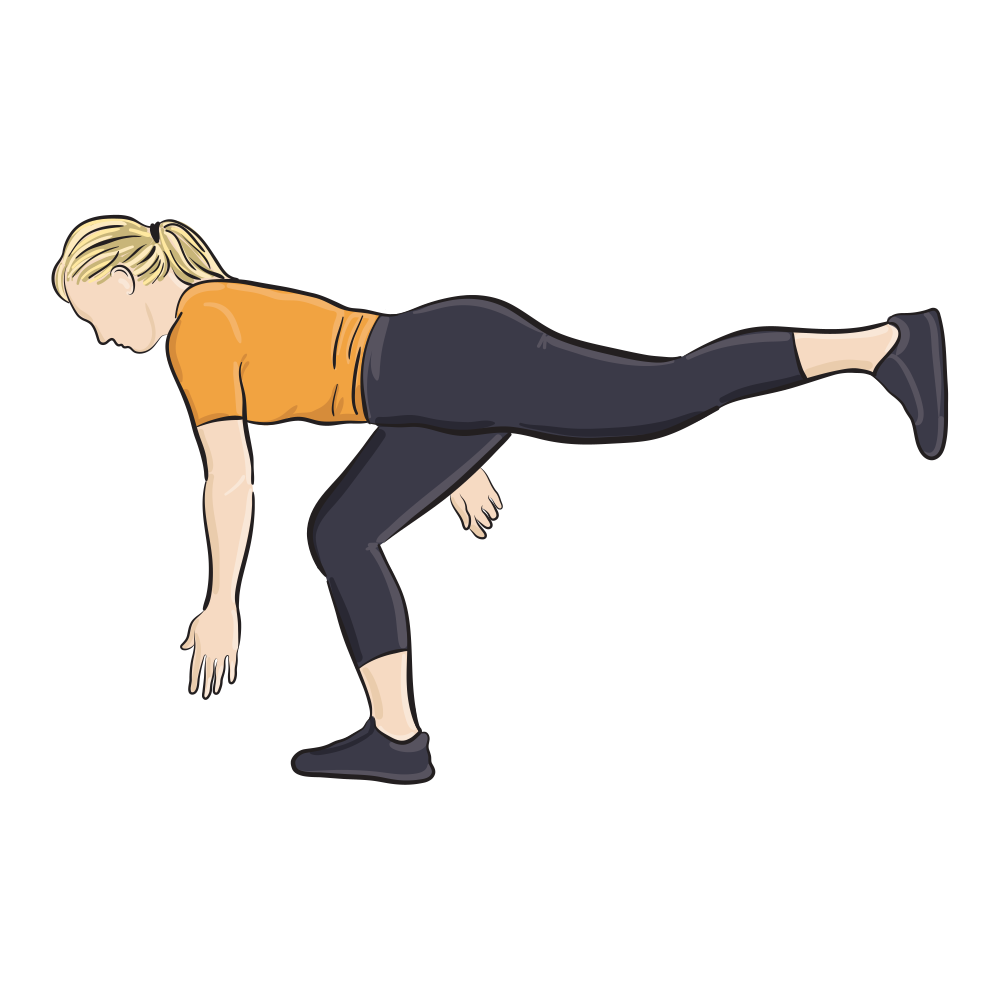
Who rehabilitation personal training in London is for
If you've been dealing with pain, injury, or post-surgery recovery and generic training hasn't worked, this is a different approach. I use DNS-based assessment and coaching to understand why the problem keeps coming back, then we rebuild from there. Most of my London clients are professionals who need to get back to training, sport, or just living without constantly managing pain.
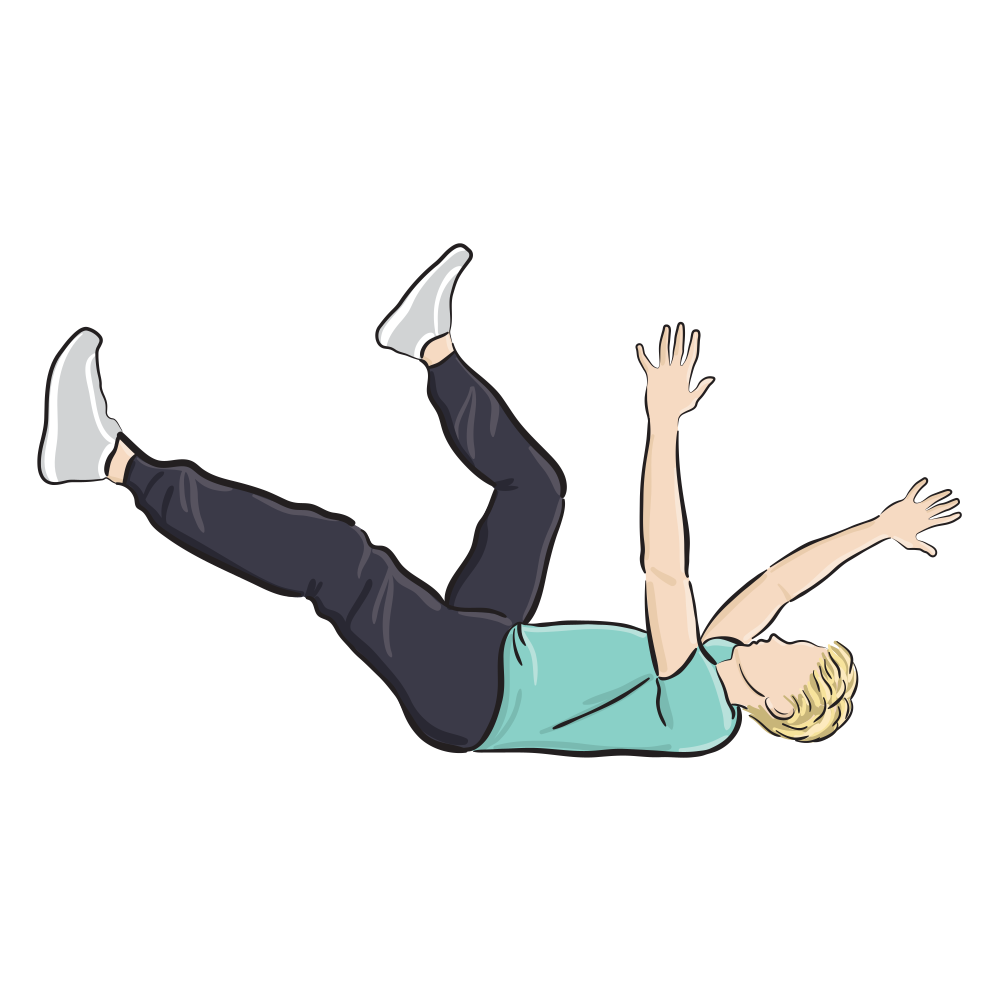
A great fit if you:
- Have persistent or recurring pain that hasn't responded to general exercise
- Are recovering from surgery and need structured, progressive rehab
- Feel cautious, unstable, or limited in movements you used to do confidently
- Want to return to the gym, sport, or golf without risking another setback
- Have been told to "just strengthen it" but that hasn't solved the problem
Common areas I help with:
- Back pain, disc injuries, and post-spinal surgery
- Shoulder impingement, rotator cuff, and SLAP tears
- Hip replacements, resurfacing, and labral tears
- Knee surgery, ACL tears, and meniscus repair
- Chronic pain, postural issues, and tendinopathy
What rehab-focused training involves
This isn't a generic exercise programme with some stretches added on. Rehabilitation personal training at Elevate LDN starts with understanding how your body is controlling movement right now, then systematically rebuilding what's missing. The process is DNS-led, which means we address the stability and control layers that conventional training often skips.
We typically work through:
- Breathing mechanics and intra-abdominal pressure control
- Core and spinal stabilisation that carries over to real movement
- Joint centration: restoring proper alignment and control under load
- Rebuilding quality in foundational patterns like hinge, squat, lunge, and carry
- Progressive loading so you build genuine capacity without triggering flare-ups
Every session is guided by your assessment and progressed when you're ready, not on a fixed timeline.
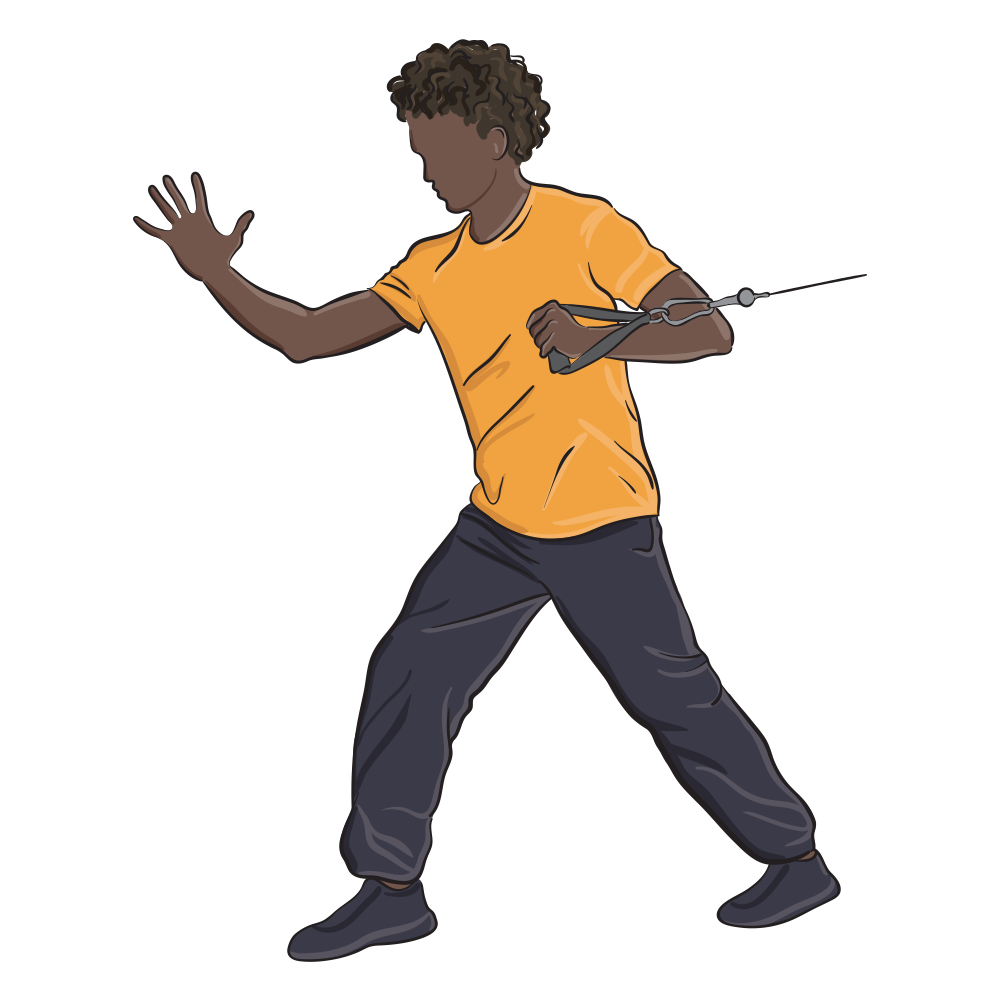
DNS rehab explained, and why it works
DNS stands for Dynamic Neuromuscular Stabilisation. It's a specialist rehab framework, and it's the foundation of how I assess and train every rehabilitation client at Elevate LDN.
A lot of the people I work with have had injuries that keep coming back, or strength that doesn't seem to hold. That's usually not a strength problem. It's a stability and control problem. DNS gives me the tools to identify where that control is breaking down and rebuild it from the ground up.
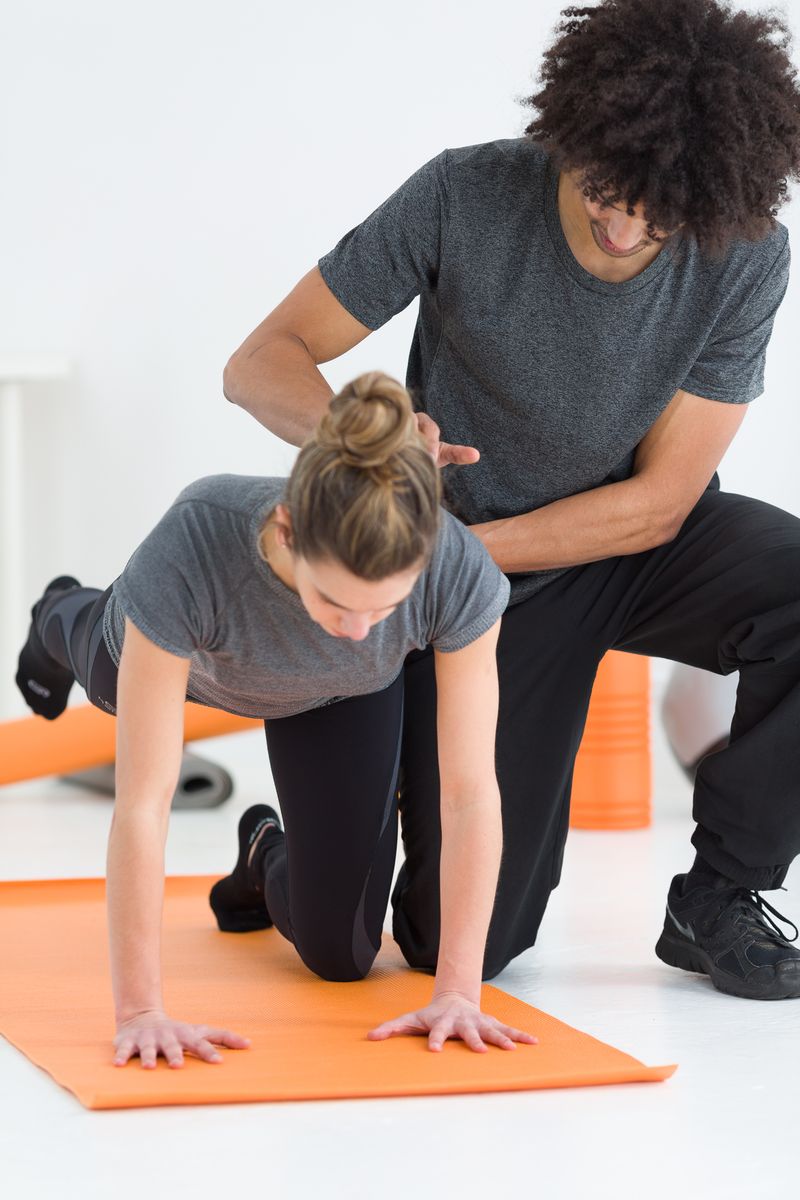
What I assess
Breathing
Patterns, ribcage mechanics, and pressure control
Spinal stability
How the stabilising system integrates with movement
Joint stability
Dynamic posture and control under load
Movement patterns
Body control in functional positions and patterns
How I train it
I use DNS principles to identify gaps in your stability and movement control, then apply what I find directly to the movements that matter to you. In a typical session, I'll move back and forth between:
- 1 Resetting breathing, ribcage position, and core control
- 2 Rebuilding control in the patterns your body needs
- 3 Loading progressively so the improvements carry over
This is what makes the approach different. You get the precision of a rehab-led method with the practicality of training that actually feels like training.
How your rehab training works
Book an assessment
I start with the full picture: your symptoms, injury history, training background, and a DNS-informed movement assessment. This tells me where your stability and control are breaking down and what to prioritise.
Build your foundations
Using what I find in the assessment, I work on the fundamentals first: breathing, core stability, joint control. This is the DNS work that stops you compensating and gives your body a stable base to build from.
Progress strength and capacity
Once the foundations are holding, I start adding load. Strength, resilience, and capacity are built at a pace that matches what your body is ready for.
Return to your training and sport
The goal isn't just getting you out of pain. It's getting you back to the training, sport, or daily life you enjoy with the confidence that your body can handle it.
Rehab that fits alongside physio and medical care
Many of my clients in London are already working with a physiotherapist, osteopath, chiropractor, or consultant. That's not a problem. I actively coordinate with clinicians so your rehab training and clinical treatment reinforce each other rather than pulling in different directions.
Over 14 years I've built strong working relationships with practitioners across the City and beyond. If you need a referral, I can usually point you in the right direction. And if you're not currently under medical care but your symptoms suggest you should be, I'll tell you.
Train in the City of London
Sessions take place at Elevate LDN, a private training facility in the Square Mile.
Elevate LDN
Lower Ground Floor, Lombard Street
London EC3V 9BS
What clients say
“I have been sending my patients to train with Ben for almost 5 years. For me it is crucial that a trainer understands how to safely and effectively train someone who is just coming out of acute injury and Ben does exactly that. I have passed him patients with a variety of issues from hip replacements to lumbar disc extrusions and am always happy with the outcomes.”
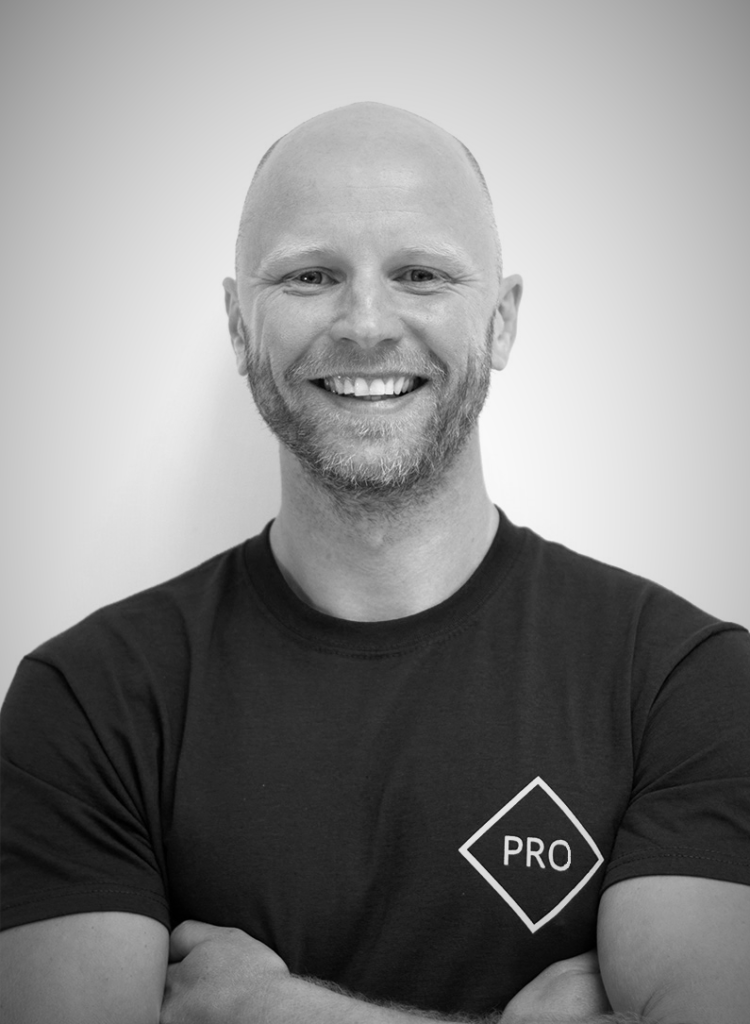
Robert Griffiths
Chiropractor at Pro Performance Clinics
“I had a discectomy on my lower back and a shoulder RSI condition, and recovery was slow, so my physio recommended sessions with Ben. I've never looked back. I feel much, much stronger. He has pushed me in all the important areas, but never pushed me too far. My advice: please don't wait. It is the best money I have spent.”
Tim B.
Client (Post-Spinal Surgery)
“Ben is the first trainer I think of to refer my recovering patients to. I need to know that they will be well looked after and given effective exercises to get them back to full fitness. I recently sent him a patient with a disc protrusion who has made remarkable progress and is back playing rugby.”
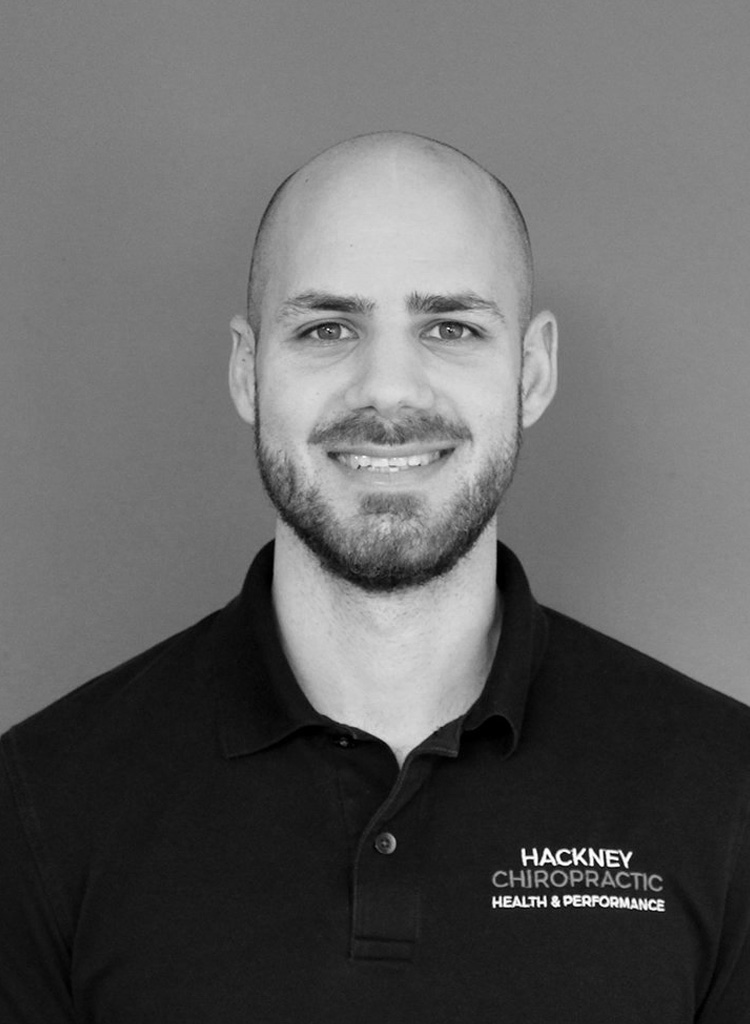
Nick Tzanos
Chiropractor at London Healthcare Clinic
Rehabilitation personal training London FAQs
Can't find what you're looking for? Get in touch and I'll be happy to help.
Book an assessment
Tell me what you are dealing with and what you want to get back to. I'll come back to you with next steps and availability.